MON 26 OCTMorning4:29 PM

Back to the brief

SCINASA

NASA’s Perseverance Offers Clues to Protect Crews From Mars Dust
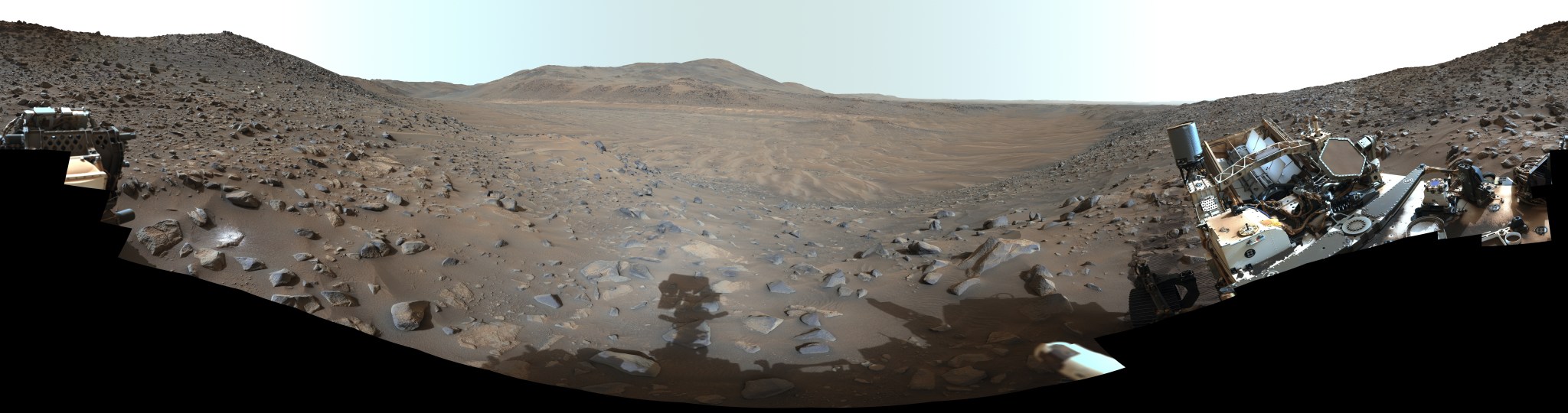
Photo: NASA

Lunar dust scratched visors, degraded outer spacesuit layers, and damaged their seals during NASA’s Apollo missions, and some crew members reported symptoms similar to hay fever.

Rounded by wind-driven collisions with other particles, dust grains on Mars are less abrasive than those on the Moon. They also are enriched in sulfur, chlorine, and iron and contain more silica than lunar dust. Regional and global dust storms on Mars can keep the grains recirculating throughout the atmosphere as well.

Read the original report

Opens NASA in a new tab

SCINASA

NASA SEES Interns Tackle Real-World Challenges in Lunar Exploration

Because a complete IM-3 trajectory is not public, the team wrote a reconstruction algorithm using published IM-1 and IM-2 flight data. To model fluid behavior, the team ran computational fluid dynamics (CFD) simulations to estimate slosh dynamics within the tanks and conducted Monte Carlo simulations to predict the range of possible propellant states. Project Mentor: Dr. Kevin M. Crosby, Carthage College and Wisconsin Space Grant Consortium Project Assistant: Mauro Esquivel, mathematics teacher, McAllen, TX

SCINASA

NASA’s X-59 Aircraft and Test Pilot

NASA test pilot Mike Lippert poses for a photo ahead of his first time flying the agency’s X-59 quiet supersonic research aircraft on Oct. 21, 2026. The X-59 has flown numerous times since its inaugural flight in November 2025; its first supersonic flight was on June 5, 2026. Lippert took off from NASA’s Armstrong Flight Research Center in Edwards, California, and landed one hour later. The flight came after scheduled maintenance and a review of the X-59’s systems following the aircraft’s busiest week of testing to date.